


What Businesses and Hotels Need To Know About Water Filtration Systems
 Hydration Insights from the OASIS Team
September 4, 2025
Hydration Insights from the OASIS Team
September 4, 2025

What Businesses and Hotels Need to Know About Water Filtration Systems
Across industries—from hospitals and schools to corporate offices and hotels—expectations for water quality are rising. Today’s guests and employees demand cleaner, safer hydration options. At the same time, hotels are under increasing corporate pressure to eliminate or significantly reduce single-use plastics as part of broader sustainability initiatives.
Every day, your facility’s visitors, staff, and customers depend on clean, safe drinking water — and they expect it without a second thought. Whether you manage a bustling hospital corridor or a university campus with thousands of refillable bottles in circulation, the quality of your water supply shapes health outcomes, compliance standings, and even overall guest experience.
The solution? Certified filtration systems that ensure every sip is clean, safe, and sustainable—meeting both compliance and corporate responsibility goals. Reliable water filtration isn’t just another line item; it’s a cornerstone of responsible facility management and environmental stewardship.
Over the past decade, regulations and standards around water safety have tightened across healthcare and education, while the hospitality sector faces its own pressures from evolving guest expectations and corporate sustainability goals. Hospitals must demonstrate rigorous infection-control measures, schools are tasked with limiting lead levels under various state mandates, and hotels face mounting guest expectations for premium water quality. Non-compliance—or failure to meet these growing expectations—can result in penalties, reputational damage, or costly retrofits.
Staying ahead of evolving standards demands a forward-looking approach to water quality management. OASIS QUASAR, our UV-C-enabled solution and advanced filtration portfolio, answers that call with industry-leading performance. As we explore the landscape of commercial water filtration, you’ll see how QUASAR and other technologies can help you meet — and exceed — today’s stringent requirements.
What is a Water Filtration System?
A commercial water filtration system is an assembly of cartridges, housings, and valves designed to remove unwanted substances from your incoming water supply before anyone takes a sip. By forcing water through specialized media — such as activated carbon — the system captures or neutralizes contaminants like sediment, lead, PFAS compounds, chlorine, cysts, and microplastics. The result is filtered water that meets strict quality thresholds for taste, odor, and safety while safeguarding equipment that relies on clean water to perform.
Unlike the larger umbrella of water treatment technologies, filtration zeroes in on physical and chemical contaminants. It’s often the first and last line of defense in high-use spaces, where hundreds of gallons flow through drinking fountains, ice machines, and coffee stations every day. Keeping those touchpoints free of impurities improves guest satisfaction, reduces maintenance calls, and extends the life of expensive appliances.
Water Filtration vs. Water Purification
Understanding the distinction between filtration and purification helps you choose the right tool for your facility. Here are their key differences:
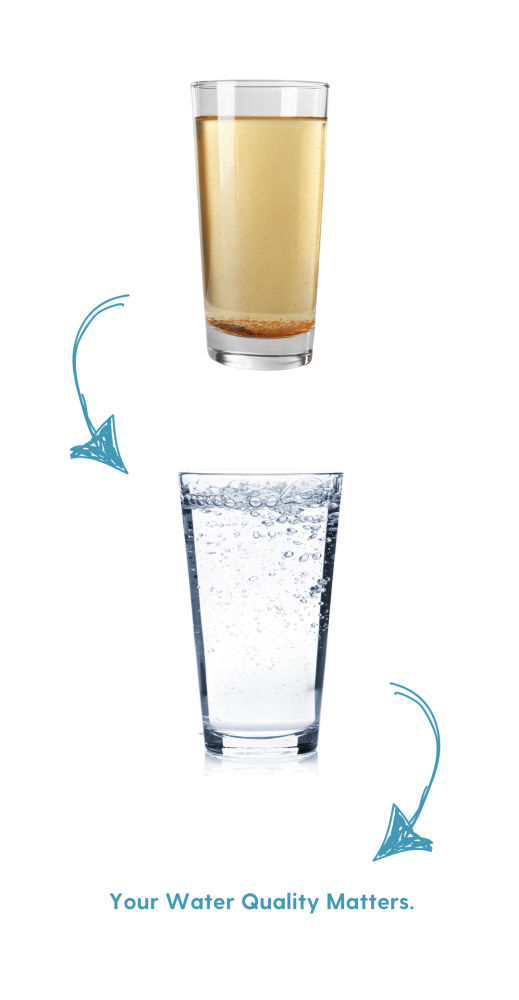
These approaches often work in tandem: a carbon filter may remove chemicals and improve flavor while a UV-C lamp finishes the job by neutralizing microorganisms. Facilities that face heightened scrutiny — think hospitals or foodservice operations — benefit from the combined strategy, especially when emerging contaminants like PFAS chemicals and compounds enter the conversation. |
 |
Types of Water Filtration Systems for Commerical Use
Facility managers have a wide array of filtration technologies at their disposal, each engineered to tackle specific contaminants while meeting different flow rate, capacity and space requirements. Selecting the right mix depends on your water source, usage patterns and regulatory obligations.
Carbon Filters
Activated carbon filters remain the workhorse of commercial hydration because they address the impurities that people taste and smell first. While not all filters can remove every contaminant, high-performance models are designed to reduce many of the most common ones, including:
-
Chlorine and chloramine: Carbon’s porous structure adsorbs these disinfectants, preventing the chemical aftertaste that discourages bottle refills.
-
Volatile organic compounds (VOCs): By trapping industrial solvents and pesticides, carbon improves both safety and flavor.
-
Odors: Sulfur compounds and musty flavors are removed, producing clean water that encourages hydration.
-
Trace pharmaceuticals: High-grade carbon blocks in systems like the OASIS Pharmaceutical Filter capture common over-the-counter and prescription residues that can slip past municipal treatment.
The result is fresher, better-tasting filtered water that enhances hot beverages, kitchen prep and customer perception. Because a carbon water filter rarely requires electricity and is simple to swap, they fit seamlessly behind wall-mounted bottle fillers and drinking fountains.
|
|
Ultraviolet (UV) Purification
Where carbon handles chemicals, UV purification neutralizes living threats. By exposing water to a calibrated dose of UV-C light, microorganisms’ DNA is disrupted, rendering bacteria and viruses unable to reproduce.
OASIS QUASAR takes this principle further with an advanced UV-C LED located at the point of dispense. The system:
|
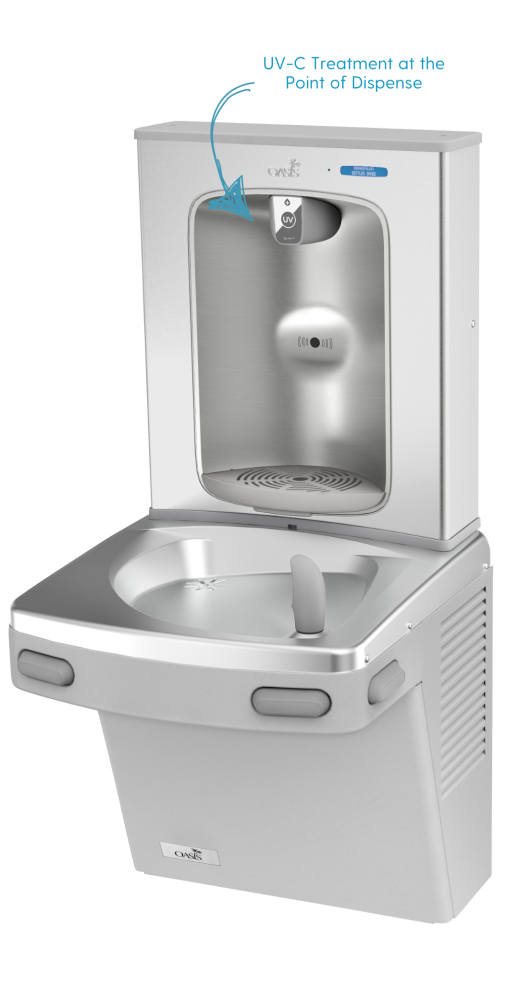
Beyond UV, QUASAR units accept the full OASIS indoor filter portfolio — including VersaFilter III, Total PFAS and Pharmaceutical cartridges — all certified to NSF/ANSI 42, 53, and 401 for lead, particulate Class 1, chlorine, taste, odor, and microplastics reduction, plus NSF/ANSI 372 for low lead compliance. Targeted specialty filters tackle PFAS compounds or an industry-exclusive list of 12 pharmaceutical contaminants. Every cartridge uses the same head, so you can upgrade protection without replacing fixtures — an advantage highlighted in our commercial filtration portfolio.
Because these filters retrofit into existing fountains and bottle fillers of varying size, converting legacy equipment into a high-performance water filtration system is both fast and budget-friendly. Outdoor-rated filters even feature temperature-tolerant media for municipal parks and stadium concourses where heat would disable standard cartridges.
Together, carbon and UV technologies deliver a two-stage defense that tackles taste issues, chemical pollutants, and microbial hazards in one streamlined package — exactly what high-traffic facilities need to keep every refill safer, refreshing, and compliant.
A Deep Dive into Why Filters are Necessary
Even when your building relies on treated municipal water that meets regulatory standards, you may still want tighter control over taste, odor, and emerging contaminants. Facility-level, point-of-use filtration lets you set a higher bar for water quality at the dispenser, aligned to your health, sustainability, and guest-experience goals.
PFAS “forever chemicals” illustrate why added protection matters. These synthetic compounds are chemically persistent and can remain in finished water because they’re difficult to remove with conventional treatment. These synthetic compounds — used in non-stick coatings, firefighting foams, and countless industrial processes — do not naturally break down. They accumulate in groundwater, resist conventional treatment, and pose potential health risks even at parts-per-trillion concentrations. In fact, the USGS found that at least 45% of the nation's tap water is estimated to have one or more types of PFAS. Incorporating specialty cartridges that target PFAS, such as the OASIS Total PFAS filter, provides peace of mind at the point of use.
|
The Environmental Protection Agency also tracks more than 90 regulated contaminants across four broad categories. Each can find its way into tap water and into your occupants’ refillable bottles:
Pharmaceutical residues add another layer of complexity. Studies detect trace amounts of antibiotics, hormones and pain relievers in many municipal systems. While concentrations are low, perceptive guests may question safety unless you can demonstrate active removal via certified filters.
Finally, everyday nuisances — chlorine taste, sulfur odor, dirt, and fine sediment — erode user confidence and can shorten the lifespan of bottle fillers and drinking fountains. By capturing these impurities before they circulate through your building, you extend equipment life, reduce service calls and create a superior drinking experience. |
|

|
|
What to Look for in a Commercial Water Filtration System
Choosing the right water filtration system means balancing performance, compliance, and practicality. Start by examining the metrics that prove a filter’s effectiveness.
Filtration efficiency is measured in microns—the smaller the rating, the finer the particles it can remove. A 0.5-micron carbon block filter captures contaminants such as cysts and microplastics, while the activated carbon within the filter reduces lead and chlorine, which affect both safety and taste.
Pair that with a UV-C LED, and you address bacteria and viruses in the same pass. Always review independent test data to confirm reduction rates for the contaminants that matter most to your facility. |
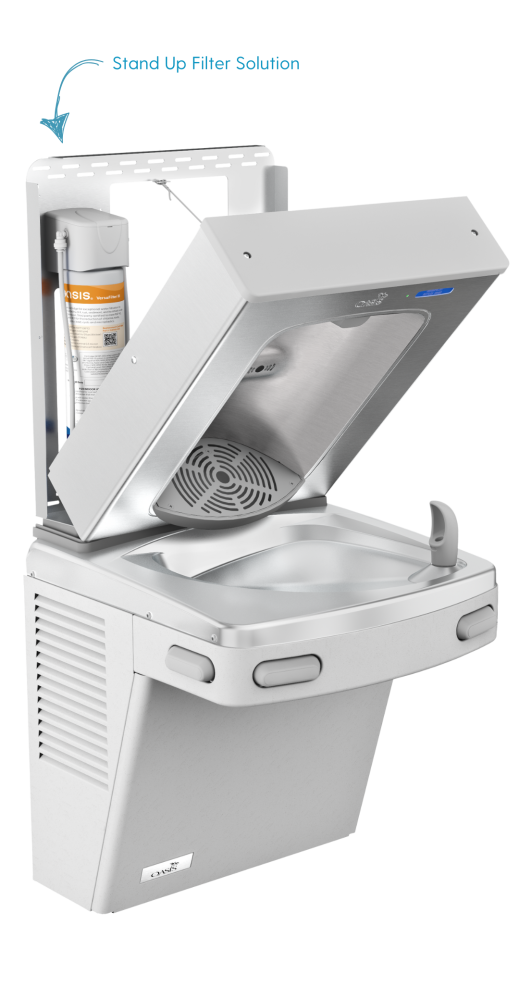
Next, verify NSF/ANSI certifications. Standards 42, 53, and 401 cover aesthetic chlorine reduction, health-related contaminants like lead, and emerging compounds such as pharmaceuticals. Certification under NSF/ANSI 372 confirms low lead content in the device itself. These seals validate manufacturer claims and help satisfy auditors who enforce local health codes. On top of compliance, filter installation should be straightforward, minimizing downtime and labor costs. Upgrades are even simpler when the new OASIS filter cartridges retrofit any model.
Maintenance is another deciding factor. Look for 1/4 turn locking filters that do not require a water shut-off, reducing technician time and lowering the overall cost of ownership. OASIS units excel here; our Tilt ‘N Tether mechanism makes your filtration replacement routine easy, so you can swap cartridges in under a minute without specialty tools or crawling on the floor.
Key Features to ConsiderBefore finalizing your purchase, evaluate these practical details to ensure the system meets day-to-day demands:
By weighing these factors together — efficiency, certification, installation ease, and total cost of ownership — you position your facility for consistent clean drinking water delivery year after year. |
|
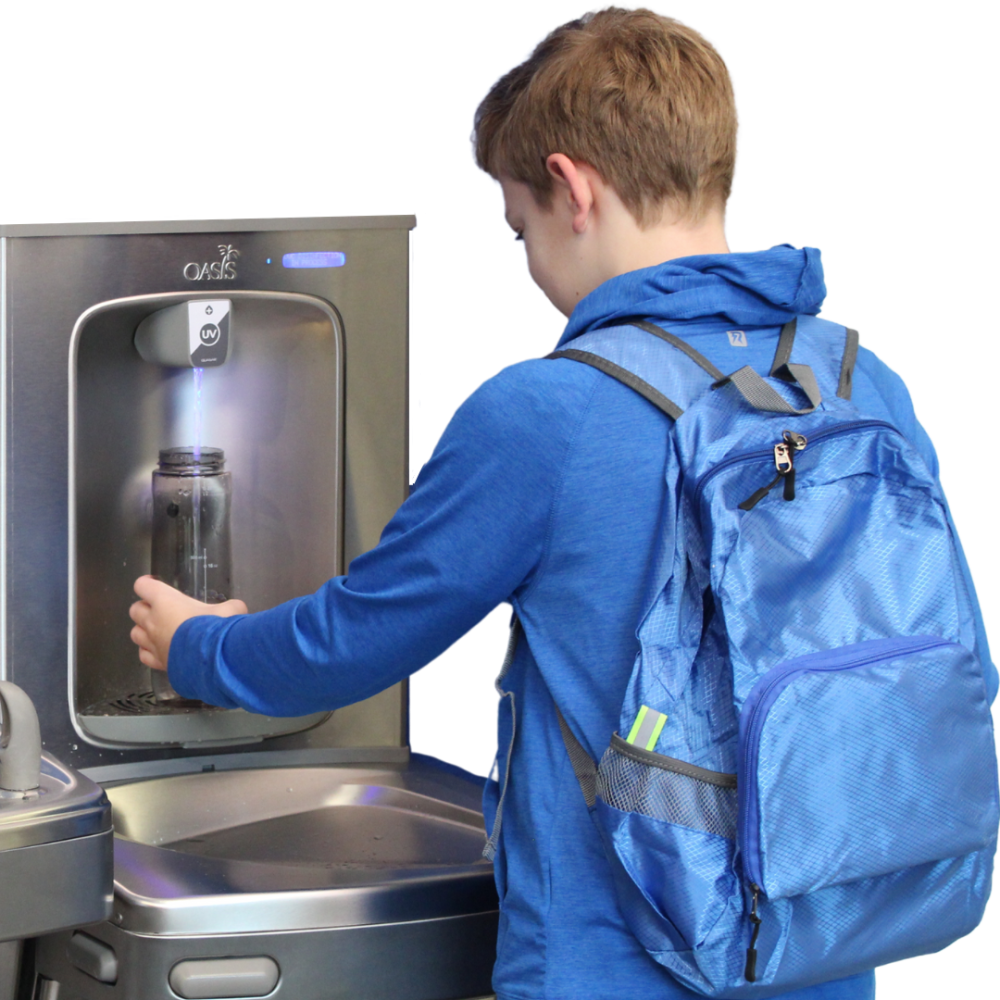
OASIS QUASAR: Advanced Protection for High-Use Spaces
QUASAR harnesses UV-C LED technology to neutralize 99.9% of pathogens at the moment water leaves the spout. By positioning the light in the dispense area, the system safeguards every drop. In addition, treatment at the dispensing point reduces the potential for microbial regrowth at the dispenser's outlet, where contamination from external sources can occur. This level of protection is invaluable in facilities where the water source, user volume, or regulatory landscape leaves no room for error.
Maintenance stays refreshingly simple. QUASAR’s UC-C LEDs activate only when water flows, which extends lamp life well beyond that of traditional mercury bulbs. The compact design slips behind existing panels, and filter swaps take seconds thanks to the universal OASIS cartridge head. Because QUASAR operates without chemical disinfectants, it eliminates storage concerns and the risk of residual taste or odor. That advantage matters in public spaces where guests expect filtered water to taste clean every single time.
High-traffic zones are where QUASAR truly shines:
-
Education: Hallway bottle fillers encourage students to hydrate while UV-C protection keeps water quality consistent across an entire campus.
-
Healthcare: Patient rooms, waiting areas, and staff lounges gain a barrier against waterborne pathogens— aligned with stringent accreditation standards.
-
Hospitality: Guests value luxury touches; safe drinking water reinforces brand reputation and reduces reliance on single-use plastic bottles.
-
Municipal and Transportation: Airports, arenas, and train stations serve thousands of refillers each hour, making fast, touch-free filtration essential for public health.
Filtered Drinking Water Made Easy and Accessible
Clean, great-tasting water is more than a convenience — it’s a fundamental requirement for health, compliance, and guest satisfaction. Investing in the right water filtration system ensures every refill meets strict quality standards while protecting your infrastructure and budget.
OASIS delivers that assurance through a portfolio of certified filters and UV-C LED solutions engineered for the demands of high-traffic industries. Whether you oversee a school district, a regional hospital network, or a busy transit hub, there is an OASIS configuration that fits your space, flow rate, and maintenance schedule.
Explore the options that align with your goals, from compact wall units to full-featured bottle fillers with advanced UV-C protection. To discuss specifications, life-cycle costs, and retrofit possibilities, contact OASIS today and discover a tailored path to safe, accessible drinking water for everyone who walks through your doors.
Let's keep hydration flowing!

About the Author
Explore more articles
Understanding the Surge in Demand for High-Quality Water Solutions
Bottle Filling Stations – Trends and Demand

OASIS Coolers Bottle Filler Conversion Kit

Mechanically Activated Bottle Fillers Work Without Electricity