


Is Drinking Fountain and Bottle Filling Water Filtered? Unveiling the Truth About Public Water Quality
 Hydration Insights from the OASIS Team
January 8, 2026
Hydration Insights from the OASIS Team
January 8, 2026
Is Drinking Fountain and Bottle Filling Water Filtered? Unveiling the Truth About Public Water Quality
Public drinking fountains dot school hallways, city parks and office corridors, offering a quick sip of water without the single-use plastic bottles many of us try to avoid. Beyond convenience, staying hydrated supports sharper thinking and sustained energy — research shows that well-hydrated people retain information more effectively and experience fewer fatigue-induced slumps, essentially turning water into a fuel for learning.
Yet despite their ready access to clean water, many Americans hesitate at the bubbler due to concerns about cleanliness. Is that splash from a public water fountain filtered and truly safe to drink?
This article examines the different types of drinking fountains found across the United States, unpacks how modern filtration systems work, explores potential contaminants — from lead to chlorine and emerging chemicals like forever chemicals (PFAS) — and highlights the regulations, maintenance practices and safety tips that keep public water flowing fresh. By the end, you’ll know how fountain water stacks up against bottled water and how to ensure the next press of the button delivers clean, safe water for everyone.
What Are Public Drinking Fountains and Why Do We Use Them?
In countless schools, transit hubs and parks, a public water fountain serves a simple purpose: to give people immediate, no-cost access to clean water. Whether you’re refilling a reusable water bottle between meetings or sending children off to recess, these fountains reduce dependence on single-use plastic bottles and make hydration an easy, everyday habit.
The idea isn’t new. Early municipal fountains were installed to promote public health and social equity — anyone, regardless of income, could draw safe water instead of purchasing it. Over time, public expectations shifted. Concerns about germs, lead pipes and emerging chemicals have driven facilities to upgrade basic fountains into chilled coolers or combination units with advanced filtration and antimicrobial surfaces.
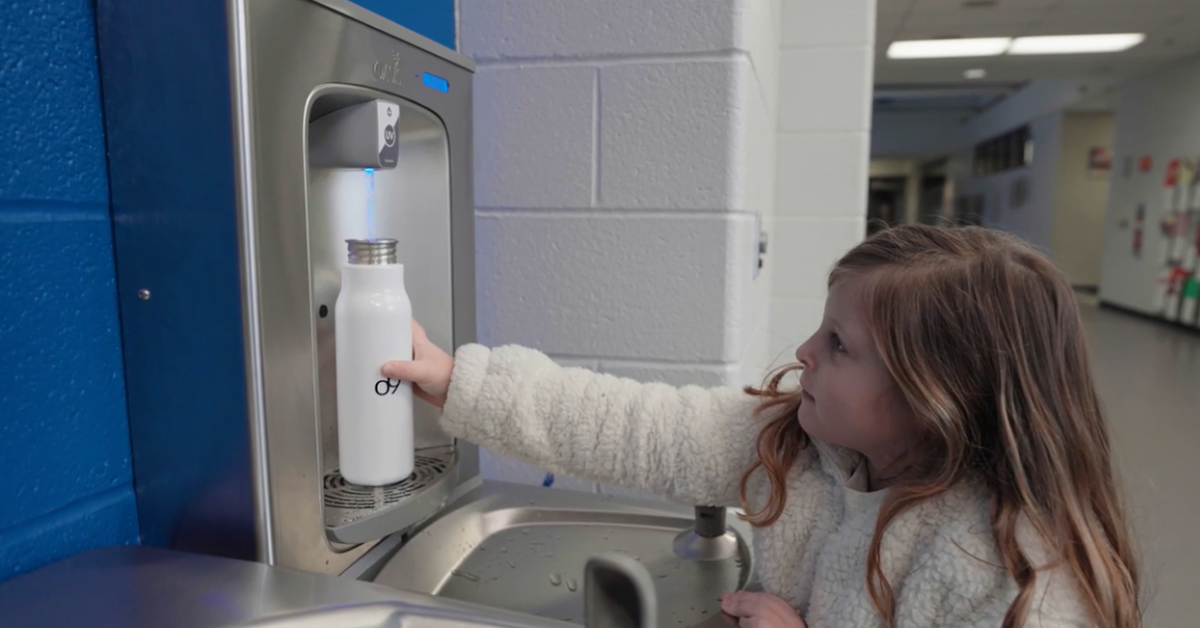
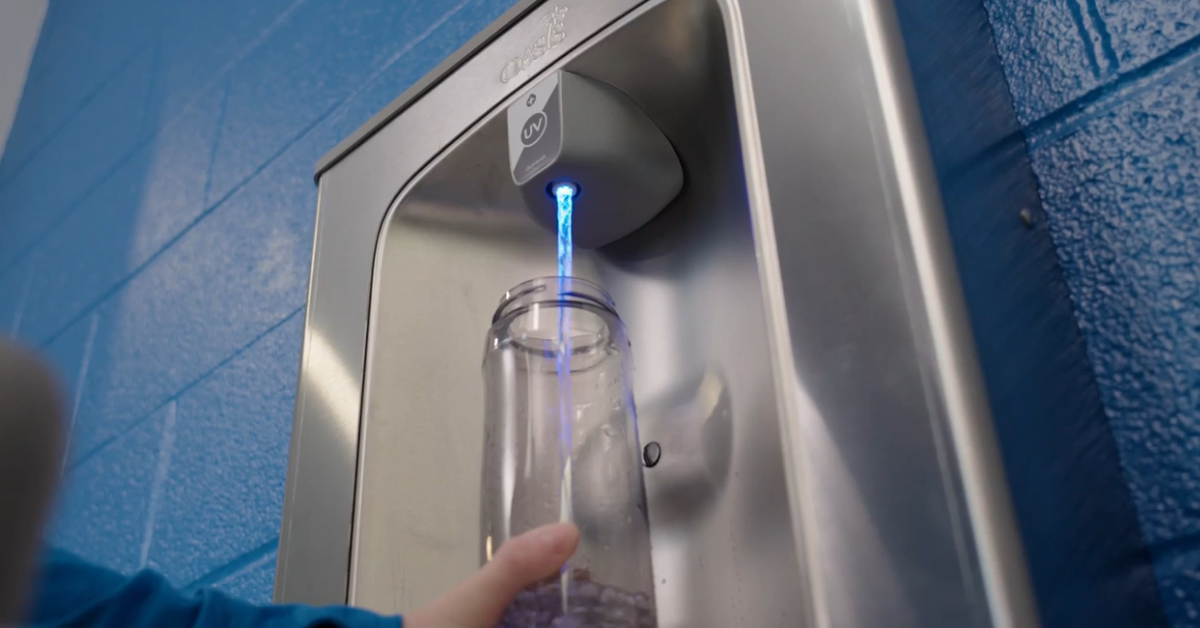
Touchless bottle-filling stations represent the latest evolution. These units pair a traditional bubbler with a contactless bottle filler that sends filtered water cascading straight into a reusable bottle — limiting contact with germ-prone toggles and encouraging eco-friendly behavior. Facility managers appreciate the sustainability story, and users enjoy water that often tastes as crisp as premium bottled water without the price tag or plastic waste.
Types of Drinking Fountains Today
Before exploring filtration technology, it helps to recognize the three most common fountain styles you’ll encounter:
-
Traditional fountains: These wall-mounted fixtures connect directly to the municipal water supply, and it’s often unknown if they’re filtered.
-
Water coolers: Essentially an upgraded fountain, a cooler features a refrigeration unit that delivers cold tap water and may include an internal filtration system to improve taste and odor.
-
Bottle filling stations: The modern hybrid. A sensor-activated spout fills bottles quickly, and a majority of units are non-filtered in the field today. However, there’s the opportunity to offer a filtration system if it doesn’t already house one. OASIS retrofit filters are NSF certified, meaning they remove contaminants like chlorine taste, lead and certain microplastics, providing filtered water on demand.
Are All Public Drinking Fountains Filtered?
Walk up to a public water fountain in the United States and you may be drinking straight from the municipal water supply, or you may be sipping water that’s passed through an advanced filtration system. Shockingly, only about 27% of bottle fillers and drinking fountains are truly filtered in the United States. By contrast, newer installations in high-traffic venues and forward-thinking facilities, such as educational facilities, increasingly specify integrated water filters as part of broader health and sustainability goals.
“An increasing number of customers are specifying filtered drinking water fixtures in their facilities in recent years,” said Stephanie Guttas, Product Manager for OASIS International. “It is often a slow migration from 'consumer interest' to commercial demand, sometimes taking years before consumer/residential preferences are reflected in the designs of commercial spaces. However, consumer awareness and concern over recent EPA rulings and stressed water supplies have driven real demand for filtered drinking water fixtures in commercial spaces. Additionally, state legislation is mandating the use of water filters in schools and day care centers. Since filtration is prominently on display with bottle fillers, increased demand for bottle fillers often carries demand for filters. All these factors have bolstered our filtration growth.”
Whether a fountain is filtered often comes down to factors like location, age and maintenance budgets. Urban districts renovating mid-century school buildings may choose to retrofit existing units, while brand-new corporate campuses install touchless bottle fillers equipped with smart filter indicators to reassure users. The 2020 pandemic only accelerated those upgrades, as facility managers looked for ways to minimize germs and deliver visibly cleaner, odor-free drinking water — driving demand for units that promise comprehensive water filtration.
Even the best filter, however, only performs to its full potential if maintained on a schedule. That’s why OASIS engineered the Tilt ‘N Tether system, noting that technicians can perform a filter swap in under one minute. A built-in tether keeps the unit stable, so workers can avoid lying on the floor or getting their hands dirty — streamlining upkeep and keeping germs at bay while the fountain stays on the wall. Once installed, these filter cartridges tackle a host of everyday water woes.
Regulation is also nudging more venues toward filtered water. Michigan’s Clean Drinking Water Access Act, for example, now requires at least one filtered bottle-filling station per 100 occupants in schools, complete with NSF-certified, lead-reducing filters and visible cartridge-status lights — proof that state-level policies are raising the bar for safe water in drinking fountains.
How Do Drinking Fountain Filtration Systems Work?
At the heart of a modern drinking fountain sits a filtration system designed to tackle a long list of potential contaminants; think lead, chlorine, microplastics, and even pharmaceutical residues. OASIS systems, for instance, carry NSF/ANSI 42, 53, 372 and 401 certifications that validate reductions in taste-and-odor chlorine, particulate class 1 matter, lead, cysts and select emerging compounds. This is all done while sharing a universal filter head that lets facilities retrofit legacy fountains rather than having to buy a completely new system.
Because regulations evolve, filters also have to keep pace with chemicals that slip past conventional municipal water treatment. When the Environmental Protection Agency loosened limits on several PFAS compounds, experts warned that the move could allow more of these “forever chemicals” to linger in public water supplies — an outcome that makes broad-spectrum solutions such as Total PFAS cartridges even more critical.
PFAS draw attention partly because of the health risks they carry. Long-term exposure has been linked to illnesses ranging from liver damage to fertility issues and certain cancers, underscoring why proactive filtration is becoming a must-have rather than a nice-to-have for safe water in schools, parks and workplaces.
Before looking at maintenance schedules, consider what a typical multi-stage cartridge can remove:
-
Chlorine taste and odor for fresher flavor.
-
Lead leached from aging plumbing.
-
Microplastics and certain pharmaceuticals that slip through municipal treatment.
-
Select PFAS compounds — an area where a carbon block filter with different media added can step in.
No filter eliminates every contaminant, nor does it last forever. Carbon media eventually exhausts, and specialty resins lose capacity. Following the manufacturer’s replacement interval — often every 12 months or per the filter light indicator, as filters vary in capacity — ensures you continue getting truly filtered water instead of tap water that just passes through an expired cartridge.
How Often Should Drinking Fountains Be Cleaned and Maintained?
Routine cleaning is the first defense against germs that accumulate on high-touch parts like toggles and bottle sensors. Beyond surface hygiene, a structured maintenance schedule keeps internal components performing at their peak:
-
Maintenance: The only maintenance operation required is the removal of dirt and lint from the condenser, where used. Inspection should be made at 3-month intervals. To access, remove the front panel. Disconnect the power supply cord and then clean the condenser with a small, stiff, non-wire or vacuum cleaner attachment brush when required. Observance of this procedure will ensure adequate air circulation through the condenser, so operation is efficient and economical.
-
Cleaning: The outside of the unit can be wiped clean with a mild soap and water mixture. Never use harsh chemicals or abrasive cleaners, including any chlorine solutions. Rinse thoroughly with clean water, then dry surfaces.
-
Overload protection: The compressor motor, when used, is equipped with an automatic reset protector, which will disconnect the motor from the line in case of an overload.
-
Lubrication: Many units are equipped with a hermetically sealed compressor that requires no additional lubrication. The fan motor on most units seldom needs oiling. If it’s required, a few drops of SAE 10 oil should be used.
How Does Fountain Water Compare to Bottled Water?
Bottled water often feels like the safer choice, yet it’s sometimes the same municipal water many drinking fountains deliver. In the United States, public water is regulated by the Environmental Protection Agency, while bottled brands fall under Food and Drug Administration rules. Both agencies set safety thresholds for contaminants, but only fountain water adds the convenience of free, on-demand refills without the cost — or the plastic waste — of single-serve bottles.
Modern hydration stations go a step further by offering filtration that rivals (and sometimes surpasses) what bottling plants use, providing crisp, clean and refreshing H2O.
Beyond taste, filtered fountains clearly win on sustainability and cost. Swapping disposable bottles for a reusable water bottle can eliminate hundreds of single-use plastic bottles per person each year and cut the energy tied to manufacturing, shipping and recycling that plastic. Meanwhile, facilities that replace filters on schedule spend pennies per gallon compared with stocking bottled water or vending machines.
Take Your Filtration to the Next Level
Some public fountains still serve straight municipal water, while others deliver crisp, filtered water that rivals any bottled brand. The difference often comes down to proactive maintenance, certified filtration systems and compliance with evolving regulations. Choosing a fountain equipped with an NSF-certified water filter — and changing that filter on schedule — helps safeguard against contaminants such as lead, chlorine, microplastics and PFAS compounds, giving children and adults alike access to consistently safe water.
Ready to upgrade your school, park or workplace? Look into our water coolers and drinking fountains to find the ideal solution for your community. If you have questions about filter options, maintenance plans or meeting local regulations, contact our team for expert guidance.
About the Author
Explore more articles
Understanding the Surge in Demand for High-Quality Water Solutions
VersaCooler II Drinking Fountains Features and Benefits

VersaFiller Bottle Filler Features and Benefits
Bottle Filling Stations – Trends and Demand